
Tree Protection Plans Wollongong
Tree Protection Plans for Development Applications, Construction and Council Compliance
Need a Tree Protection Plan for a Wollongong development?
Wollongong Tree Permit Services prepares Tree Protection Plans for residential, commercial, industrial and infrastructure developments across the Wollongong Local Government Area.
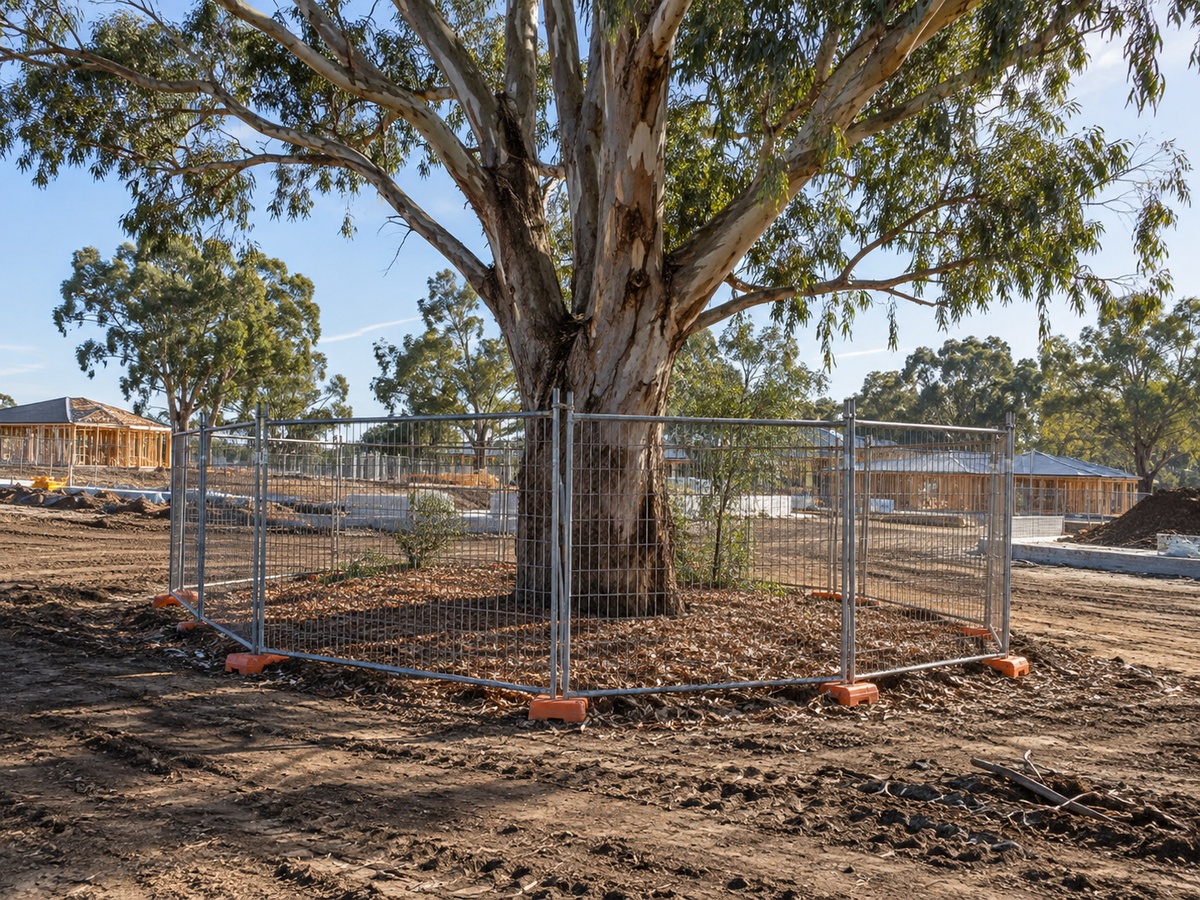
A Tree Protection Plan sets out how trees approved for retention will be protected before, during and after construction, Tree Protection Zones, Structural Root Zones, fencing, excavation controls, access, material storage, services, root protection and Project Arborist inspections.
Chapter E17 requires a Tree Protection Zone for retained trees, maintained throughout construction and kept clear of buildings, footings, excavation, retaining walls, material storage, services, level changes and hard surfaces, with certification from an AQF Level 5 Arborist before construction, during construction, and at completion.
What Is a Tree Protection Plan?
The arboricultural measures required to protect retained trees from development and construction impacts:
- Trees to be retained
- TPZ / SRZ
- Protection fencing
- Ground, trunk and branch protection
- Excavation controls near roots
- Construction access and material storage
- Underground services
- Construction-stage inspections
- Project Arborist requirements
It’s not just a circle drawn around a tree, it has to explain how the tree will actually survive the build.
When Is a Tree Protection Plan Required?
Where trees are to be retained as part of a development and construction may affect them, new homes, extensions, dual occupancies, subdivisions, driveways, retaining walls, commercial development, apartments, schools or infrastructure.
For a Development Application involving existing trees or native vegetation, Council determines whether trees should be retained, removed, or whether the layout needs modification, and the DA must be supported by a compliant Arborist Report. Where Council determines trees are to be retained, tree protection becomes part of the build.
What Must Stay Out of the Tree Protection Zone?
Chapter E17 requires the TPZ to remain clear of:
- Buildings
- Footings
- Excavation
- Retaining walls
- Material storage
- Services
- Level changes
- Hard surfaces
Some of the most damaging impacts aren’t obvious, storing materials or repeatedly driving machinery through a protected root area can compact soil even where no root is ever visibly cut. Tree protection has to work as a construction control, not just a line on a plan.
TPZ vs SRZ: What’s the Difference?
Both are considered alongside proposed excavation, footings, driveways, retaining walls or services near a retained tree, as part of the AIA and Tree Protection Plan.
Where actual root location needs establishing rather than inferring:
What Does a Wollongong Tree Protection Plan Include?
Final scope depends on the individual Development Consent, approved plans, trees and construction methodology.
When Should the Plan Be Prepared?
Before construction, and ideally while the design can still respond to tree constraints. A plan prepared after excavation has already started can’t undo impacts that have already happened.
Early preparation coordinates tree-protection requirements with architectural and engineering plans, demolition, site establishment, access, excavation, service routes and construction sequencing.
Wollongong’s Three Arborist Certification Stages
The arborist needs to inspect protection measures before construction activity can affect the trees, waiting until excavation is underway makes it impossible to verify pre-construction measures were properly established. Appoint the Project Arborist early enough to attend all three.
Excavation Inside or Near a TPZ
Excavation near retained trees can expose or sever roots. Where construction approaches a TPZ or SRZ, the arboricultural implications need understanding before significant roots are cut, this can mean Project Arborist supervision, controlled excavation, non-destructive investigation, or design changes to footings or services.
Chapter E17 is explicit: pruning major structural roots or anchor roots is subject to a Permit. Roots found mid-construction shouldn’t be severed just because they’re in the way.
Can the Design Change to Protect a Tree?
Yes. Chapter E17 gives Council the power to require modified building or driveway layouts where existing trees are affected, which is exactly why early assessment matters:
- Tree
- TPZ/SRZ
- Proposed Development
- Conflict
- Design Response
…rather than discovering the conflict after the design is finalised and the DA is already in trouble. Responses can involve changing building footprints, driveway alignments, footing locations, retaining walls, services or construction methods.
Who Actually Installs the Protection Measures?
What Happens If Tree Protection Is Breached?
Common breaches: unauthorised excavation, damaged or removed fencing, machinery entering the protected area, material storage, root severance, soil compaction, or construction outside the approved footprint.
Chapter E17’s definition of tree injury specifically covers root-zone damage from compaction or excavation, unauthorised filling or stockpiling, and inappropriate damage to branches and roots. If a breach happens, stop the activity where practicable and get the tree and area assessed, the Project Arborist can document the incident and recommend the right response.
Tree Protection Plans for Larger Sites
Chapter E17 notes that larger sites should use a Council-approved Landscape Management Plan or Vegetation Management Plan to maintain trees, and a Vegetation Management Plan may be required where significant vegetation is present.
A Tree Protection Plan doesn’t necessarily replace every other vegetation-management document a larger or environmentally constrained site might need, the right documentation depends on the site and Council’s requirements.
Tree Protection Plans Throughout Wollongong
- Ward 1: Northern WollongongTree Protection Plans and development tree-protection services throughout Helensburgh, Stanwell Park, Coledale, Austinmer, Thirroul, Bulli, Woonona and Corrimal, plus the northern parts of Fairy Meadow, Balgownie and North Wollongong.
- Ward 2: Wollongong & FigtreeTree Protection Plans throughout Wollongong, Gwynneville, Keiraville, Figtree, West Wollongong and Mount Kembla, plus the southern parts of Fairy Meadow, Balgownie and North Wollongong.
- Ward 3: Dapto & Southern WollongongTree Protection Plans and construction-stage tree protection throughout Dapto, Horsley, Wongawilli, Berkeley, Port Kembla, Windang, Coniston, Spring Hill, Lake Heights and Dombarton.
Some suburbs sit across a ward boundary, see Council's ward search to confirm. All suburbs listed fall within the Wollongong City Council LGA.
Why Choose Wollongong Tree Permit Services?
Consulting Arborists
Tree Protection Plans and construction-stage services aligned with Chapter E17’s requirements.
Development Experience
Tree protection integrated with Development Arborist Reports, AIAs and approved plans.
TPZ & SRZ Assessment
Clear identification of tree-protection constraints and construction interfaces.
Root Investigation Capability
AirSpade investigation where actual root location needs establishing.
Project Arborist Continuity
We can continue from Tree Protection Plan preparation into construction monitoring and certification.
Construction Compliance
Pre-construction, construction-stage and completion inspections where required.
32+ Years’ Arboricultural Experience
Practical experience across tree assessment, development and construction.
Frequently Asked Questions
What is a Tree Protection Plan?
It identifies how trees approved for retention will be protected from construction impacts, excavation, root damage, compaction, machinery, material storage and services.
Does Wollongong Council require Tree Protection Zones?
Yes. Chapter E17 requires a TPZ to be established and maintained throughout construction where trees are determined for retention.
What must stay outside the TPZ?
Buildings, footings, excavation, retaining walls, material storage, services, level changes and hard surfaces.
Do I need an AQF Level 5 Arborist?
For Chapter E17’s construction certification requirements, yes, the DCP specifies an AQF Level 5 Arborist.
When does the arborist inspect the site?
Before construction, at the midpoint (or as directed by the Project Arborist on jobs longer than six months), and at completion.
Can construction occur inside a Tree Protection Zone?
Only in line with the approved development and its arboricultural requirements, the default position excludes construction activity from the fenced protection area. Any proposed interaction needs assessing against the approved documentation.
What if roots are found during excavation?
Don’t automatically cut them. The Project Arborist assesses the roots and their relationship to the approved works, major structural or anchor root pruning specifically requires a Permit.
Can you prepare the AIA, Tree Protection Plan and act as Project Arborist?
Yes, we can provide continuity from the Development Arborist Report through Tree Protection Plan preparation, construction monitoring and certification.
When should a Tree Protection Plan be prepared?
Before construction, and early enough for tree constraints to shape the development and construction planning.
Need a Tree Protection Plan in Wollongong?
Send us your plans and any consent conditions, and we’ll provide a fixed quote for your Tree Protection Plan.
Get a Free Quote 0494 077 630